


.svg)
Individual Practices
Chyawanprash: The “King Tonic”
Vaidya Vasant Lad discusses Chyawanprash, its history, and its health benefits.
10 min read

Chyawanprash is considered the “King Tonic” of youth, vigor, and vitality in Ayurveda. It is considered a Rasayana (rasa-, meaning essence, –ayana meaning path), an essential method or rejuvenating substance which extends longevity and enhances vitality. In this short interview, the esteemed Vaidya Vasant Lad, relates the story of how Chyawanprash came to be. He tells us of an elderly king who had married a third time to a very young queen. The king had lost his youthful vitality long ago. He turned to his three sons from his first and second queens asking them for the gift of transferring their energy to him. His youngest son, named Chyawan, happily offered his vigor to his beloved father. As in some futuristic movie, the king grows younger as the son grows old and withered. The son goes to study Ayurveda with the great sage Charaka, considered the father or founding contributor to the art and science of Ayurveda. While studying with the master, Chyawan creates this formula to restore his own youth, thereby creating Chyawanprash. There are different versions of the story. In another version the son makes this formula to give to his elderly father thereby restoring his youth so the father can please his new young bride.
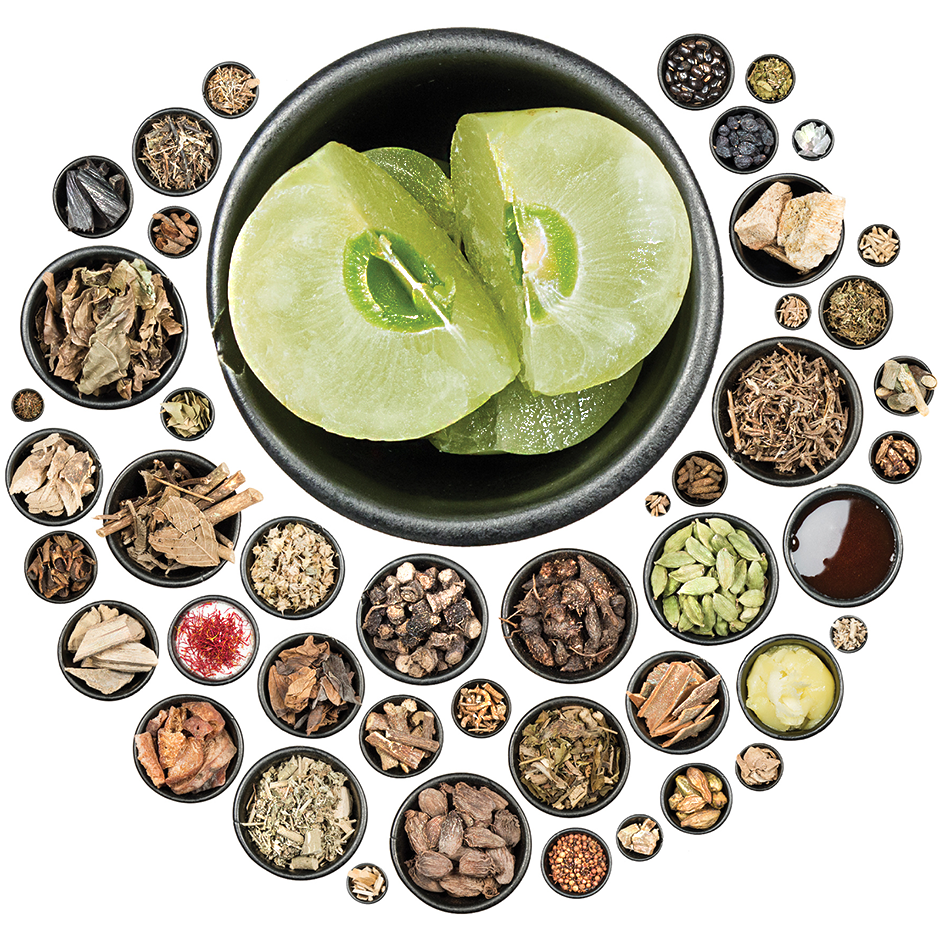
Chyawanprash is made of anywhere from 25-80 ingredients, the primary one being Amalaki (Emblica officinalis), commonly known as gooseberry. Other components include, honey, ghee, ashwagandha (Winter cherry), asparagus, bamboo manna, blue Egyptian water lily, cardamom, chebulic myrobalan, Chinese cinnamon, cinnamon bark, clove, Indian rose chestnut, country mallow, feather foil plant (Phyllanthus niruri or Bhumiamalaki), Giant potato (Ipomoea mauritiana or Kiribadu Ala), Giloy (Guduchi), Indian kudzu, Irish root, liquorice, Long pepper (Piper longum), Malabar nut (Seed of Adhatoda vasica), Nut grass, Raisins, Round zedoary, sandalwood, sesame oil, Spreading hogweed (Boerhavia diffusa), Sugar, Tiger’s claw or Ice plant, Wild black gram, Wild green gram. It’s like a kitchen sink and all kind of jam. Some brands are spicy, some are tangy, some are sweet. Some Ayurvedic practitioners make their own, and those have their own special flavor of love, as any homemade jam would.
The Ayurvedic texts and experience offer Chyawanprash as a nourishing anabolic tonic which supports healthy aging, digestion, pulmonary, reproductive, and immune system functioning. There is some modern scientific evidence that it stimulates the immune system, and for its adaptogenic and anti-oxidant properties. As with most herbal remedies, much more research is needed.