


.svg)
Individual Practices
Long Live Triphala, Long Live Us!
Vaidya Vasant Lad discusses the health benefits of Triphala.
15 min read
This podcast begins a series covering different herbal tonic formulas that can be used safely by everyone, starting with Triphala. Triphala is a classic Ayurvedic formula made of three fruits, thus the Sanskrit name Tri (three) phala (fruits). The formula is made from equal parts of Amalaki (Emblica officinalis), Bibhitaki (Terminalia bellirica), and Haritaki (Terminalia chebula).
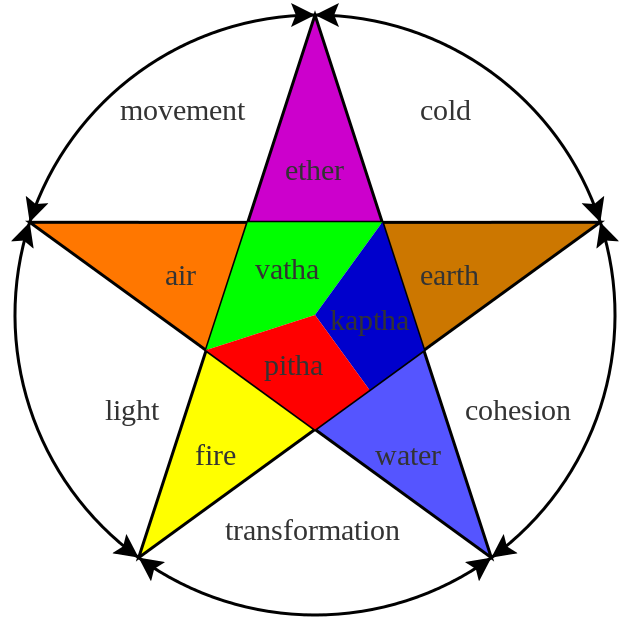
By Krishnavedala – Own work, CC0, https://commons.wikimedia.org/w/index.php?curid=25123034
One of the principles of Ayurveda is the concept of balancing the qualities of Vata, Pitta, and Kapha in the body and in one’s life. Triphala balances all three of these qualities and as such is classified as a Rasayana (rasa-, meaning essence, –ayana meaning path), an essential method or rejuvenating substance extending longevity and enhancing vitality. In short, a tonic. Triphala functions as a universal colon cleanser, a gentle laxative that cleans the entire gastrointestinal tract from the mouth all the way down to the rectum. One end to the other. There is evidence that it removes free radicals, acts as an antioxidant, and has antibacterial properties, even against organisms resistant to antibiotics such as methicillin resistant Staphylococcus aureus (MRSA) and Psueodmonas aeruginosa. Triphala is considered safe for newborns, the elderly, as well as pregnant women. To use as a Rasayana mix 1/2 tsp Triphala, 1 tsp honey, and 1 tsp ghee and take orally early in the morning.
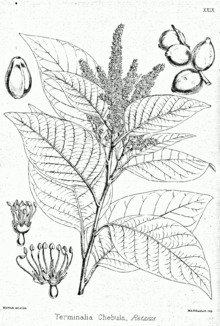
Haritaki is the component of Triphala which regulates Vata. Vata, means “wind” or “blown” in Sanskrit connoting the quality of movement, or kinetic energy. Vata is comprised of air and space and is the vehicle which carries bodily constituents and processes. It is concerned with circulation, elimination, conduction of impulses in the nervous system, and movement of the skeleton and muscles. An imbalance in Vata can cause bloating, flatulence, nervousness, anxiety, insomnia, movement disorders, tremors, dry skin, hair loss, weight loss, irregular appetite, among many other disorders. Vata imbalance causes or exacerbates the vast majority of illnesses, just as stress is considered a major factor in acute and chronic medical conditions. A slightly higher dose of Triphala is used to balance Vata.
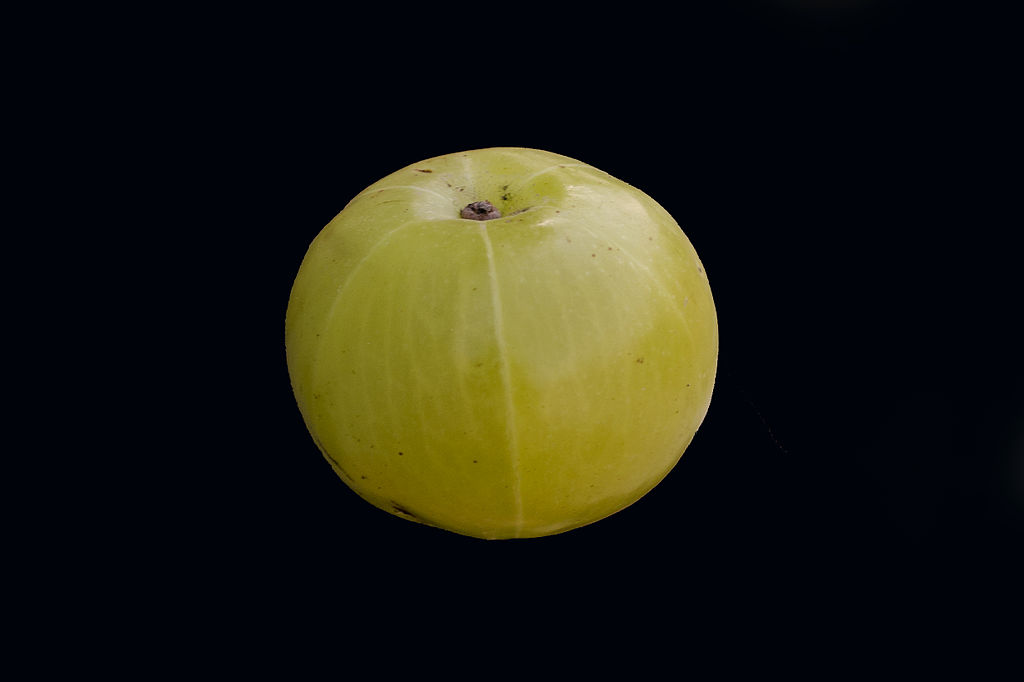
Amlaki pacifies Pitta, the quality of fire in the body, which regulates temperature, metabolism, digestion, absorption, assimilation, transformation of physical and mental input, intelligence, and passion. Pitta kindles the digestive fire, called agni, and removes the toxic byproducts of digestion, the leftover “ash”, referred to as ama. Amlaki is particularly effective in removing this toxic build up in the intestines and colon, thereby improving digestion, absorption, and assimilation of nutrients. Imbalances in Pitta can lead to poor digestion, thyroid dysfunction, rashes, ulcers, heartburn, anger and irritation. A very low dose of Triphala is required to balance Pitta.

Bibhitaki is the third ingredient in Triphala. It regulates Kapha, the quality of structure, stability, and growth. Ka (water)-Pha (flourish), is comprised of the elements of earth and water, and thereby consists of all the secretions that lubricate the body as well as all the building block materials such as proteins, fat, and bones. Disorders of Kapha can produce weight gain, diabetes, fluid retention, allergies, asthma, excessive sleepiness, depression, resistance to change, and stubbornness. A medium dose of Triphala is sufficient to balance Kapha.
Triphala has amazingly versatile applications. It can not only be taken orally but it can also be prepared as a solution and applied in the eye, or mixed with ghee and used intranasally, or as a tincture in oil placed in the ears. One can use it in powder form to massage the gums, or prepare a paste and treat skin disorders. It can even be prepared as a decoction, mixed in oil, and given as an enema.
The well-respected, world renowned Ayurvedic physician, Vaidya Vasant Lad, while explaining the properties and benefits of Triphala, poetically compares the ingredients as metaphorically related to the Hindu Trinity. He likens Haritaki to Brahma, the cosmic creative principle, Amlaki to Vishnu, the universal sustaining operative, and Bibhitaki to Shiva, offering change and radical deliverance.